Authorized VMI dealer

The minivan side of the market.

A lowered-floor minivan slips into ordinary life — it parks where you already park and drives like the car you’re used to. Three models, and the one that suits you comes down mostly to where you park.

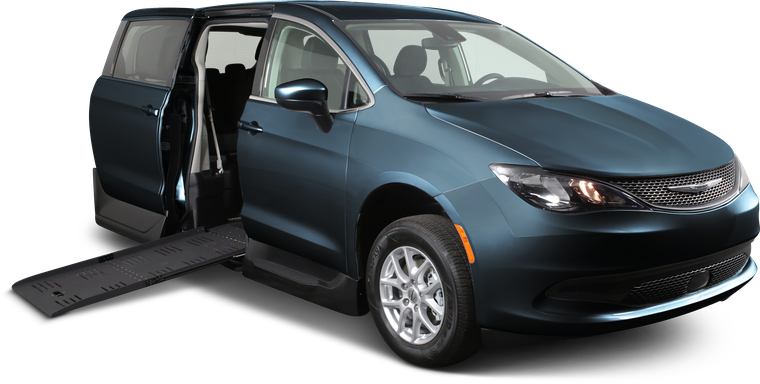
A VMI Chrysler Pacifica Northstar with its side door open and the in-floor ramp extended to the ground, parked in an accessible bay.

The Chrysler Pacifica Northstar, side entry, in-floor ramp deployed. Vehicle photography by Vantage Mobility International.

Side by side

Three minivans, six things that differ.

Everything else about them is broadly similar. These are the rows that actually change which one you should buy.

VMI accessible minivan models compared by entry, ramp, drivetrain, space needed, power-failure backup and capacity
Toyota Sienna
Northstar
Toyota Sienna
Rear Entry
Chrysler Pacifica
& Voyager
Entry Side Rear Side
Ramp Power, in-floor Manual fold-out Power, in-floor
Drive All-wheel drive hybrid Front-wheel drive hybrid Front-wheel drive
Space to deploy About 8 ft beside the van The aisle behind it About 8 ft beside the van
If the power fails Manual crank Ramp is manual anyway Sure Deploy manual crank
Carries Configurable seating 6 + one chair, or 5 + two Configurable seating
Best for Winter roads and canyons Tight parking, tighter budgets Everyday family driving
Wait Order · 2–3 months Order · 2–3 months Order · 2–3 months
Explore Northstar Explore Rear Entry Explore Pacifica

Where a row says ask us, it’s because the answer changes by trim and we’d rather check than guess. Seven-year unlimited-mile rust warranty, rubber safety flooring and LED lighting come with all three.

The eight feet that decides it

A side ramp needs clear ground beside the van to unfold onto, and room for a chair to turn once it’s down. A rear ramp deploys into the space behind — which, in a standard parking bay, is the aisle you already have.

Side entry, viewed from above A van in a parking bay with its ramp unfolding sideways into a marked eight-foot zone beside it. Without that zone the ramp cannot be used. VAN ≈ 8 ft
Side entry. Needs the striped zone. An accessible parking bay has it; your garage often doesn’t.
Rear entry, viewed from above A van in a parking bay with its ramp unfolding backwards into the driving aisle behind the bay, which exists in any standard parking space. VAN the aisle
Rear entry. Deploys into the aisle behind. You are never parked in — but the chair position ends up at the back.
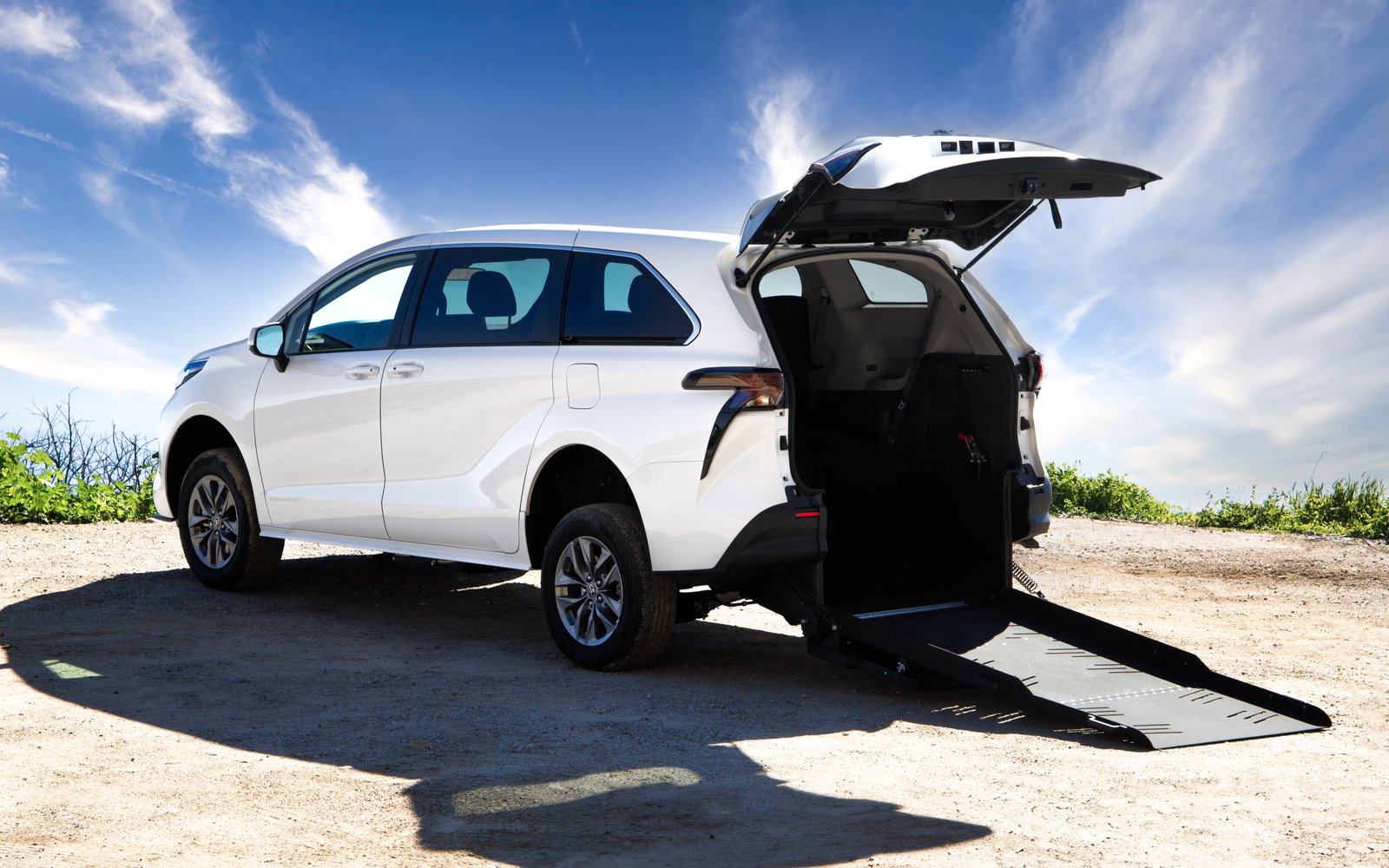
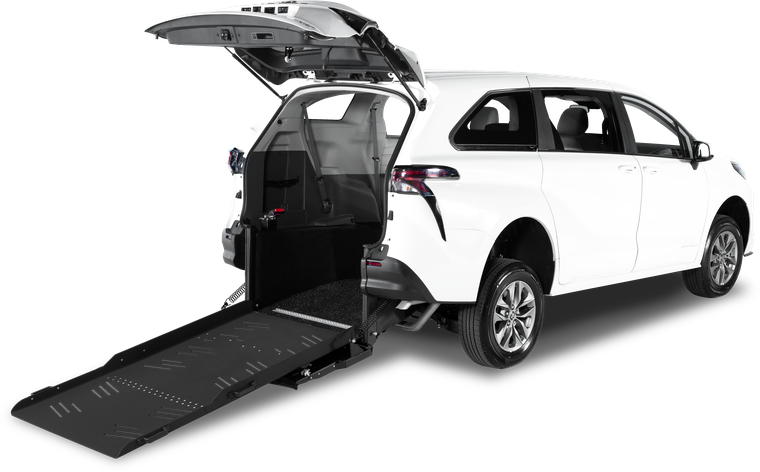
A Toyota Sienna Rear Entry in profile in an accessible bay, tailgate raised and the ramp folded out behind the vehicle onto the ground.

Rear entry, in the real world

The Toyota Sienna Rear Entry, ramp down. Note where it lands — straight out the back, into the aisle you just drove down. Nobody can box you in by parking alongside, and you don’t need the striped zone.

The trade is in the diagram above: the chair position ends up at the rear rather than beside the driver. For a passenger that’s usually fine. If riding — or driving — from up front matters, that points you at a side-entry model instead; the Chrysler Northstar can take a wheelchair user in either front seat.

The full reasoning, in the journal →

Inside the conversion

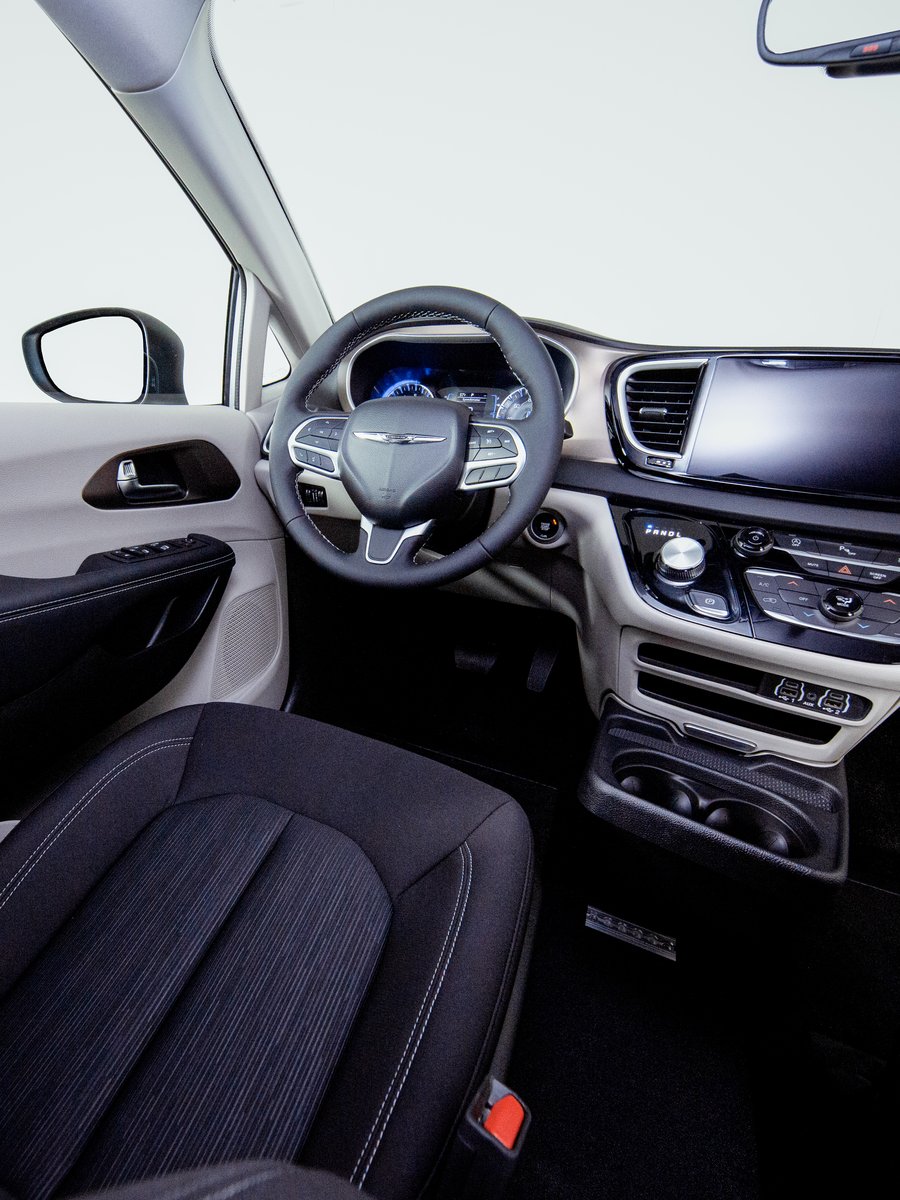
What the floor actually looks like.

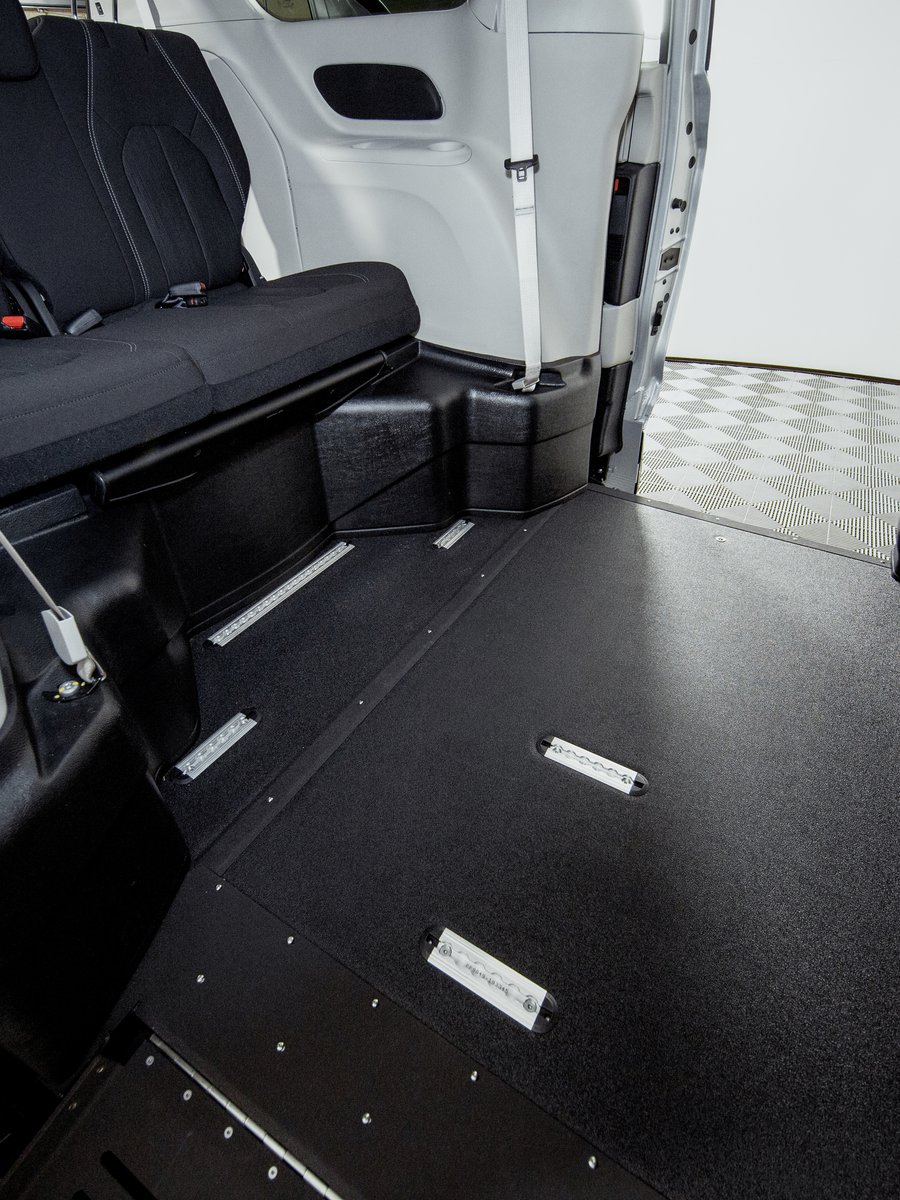
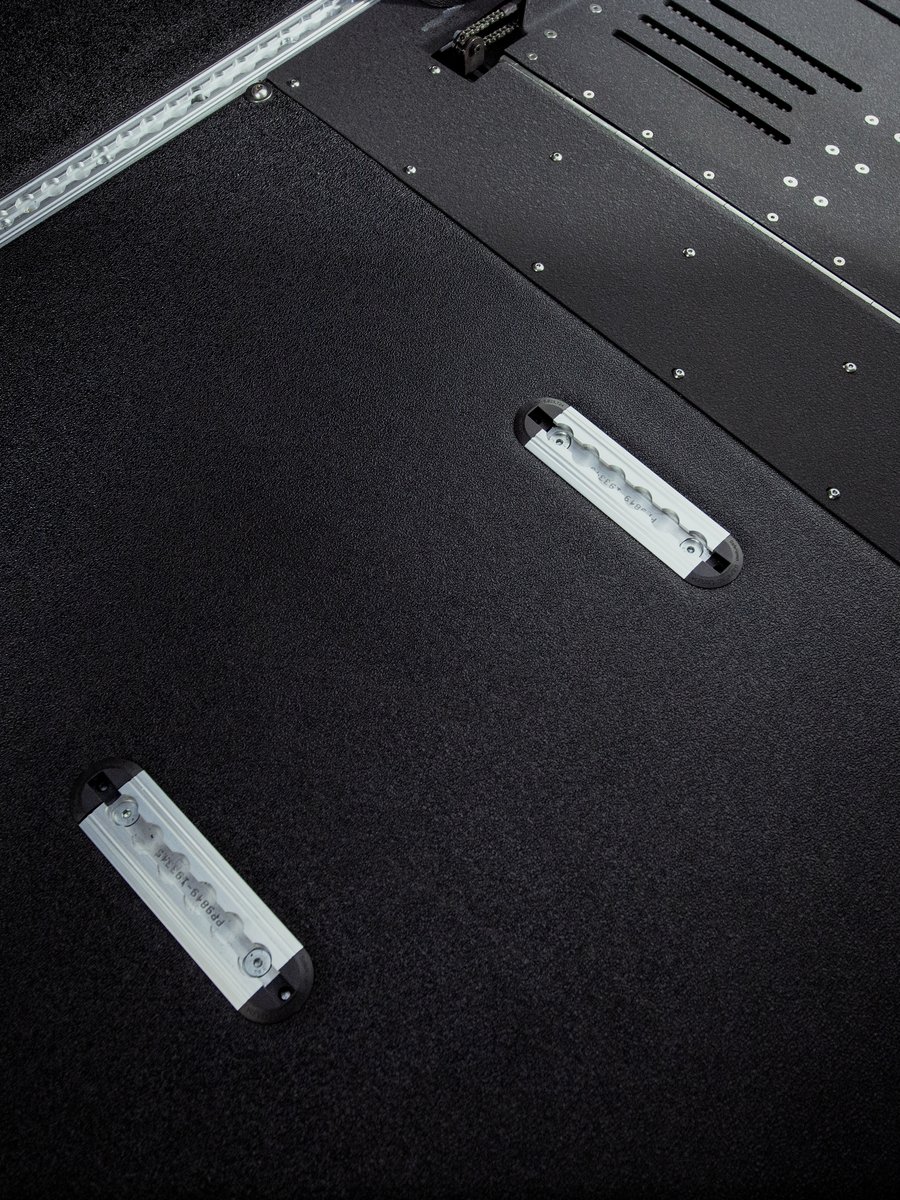
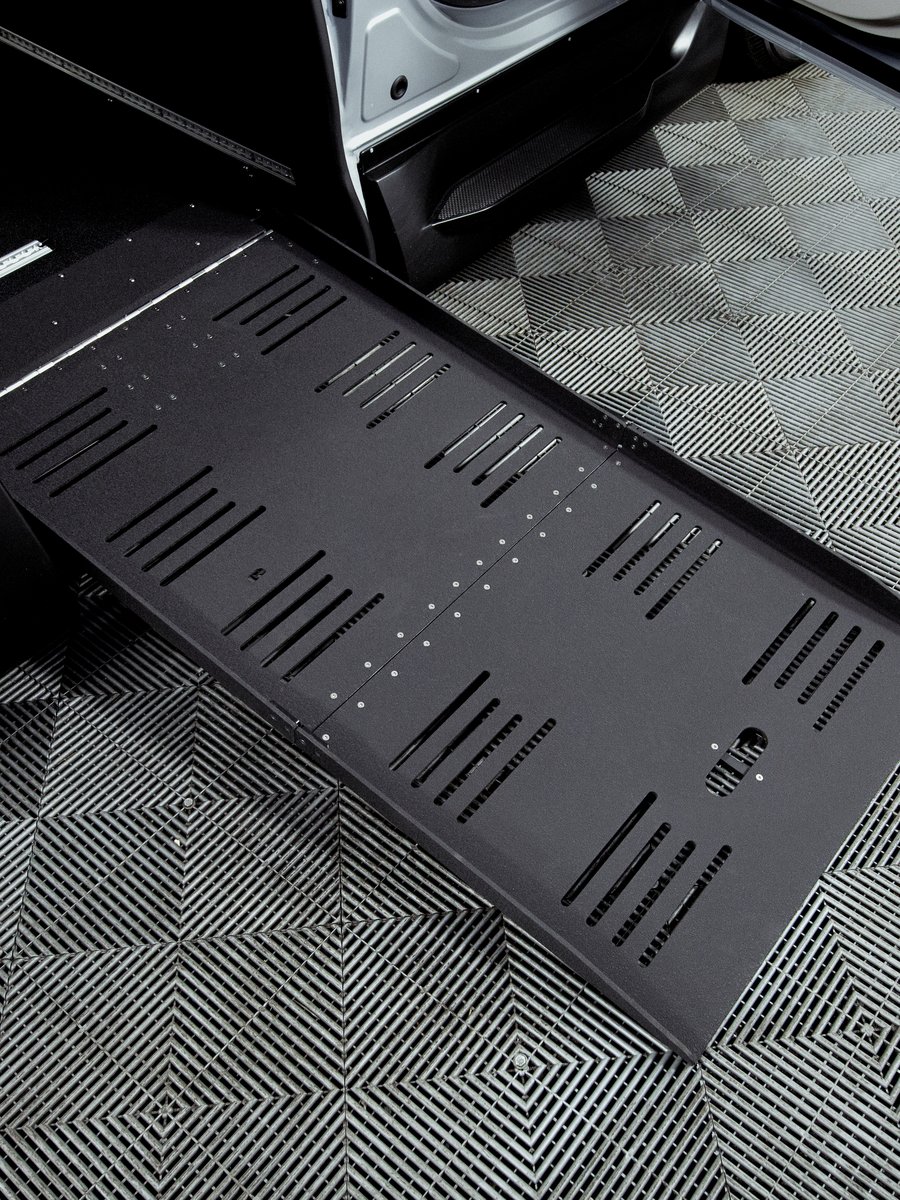
The conversion is mostly something you can’t see from outside: the original floor pan comes out and a lowered one goes in, with securement hardware built into it. This is what you’re buying.

Chrysler Pacifica Northstar shown. Vehicle photography by Vantage Mobility International — these are factory images, not vehicles currently on our lot.

Authorized VMI dealer

The minivan side of the market.

Different lives call for different vehicles, and we'd rather carry more than one manufacturer than talk you into whichever one we happen to have.

A full-size van gives you room to live: stand-up height, seats for everyone who's coming, space for chairs and gear and a week away. When you need that, nothing smaller will do — and Van America builds ours to a standard nobody else matches.

A lowered-floor minivan gives you something different — a vehicle that slips into ordinary life. It parks where you already park, drives like the car you're used to, and doesn't announce itself in the school pickup line. For a lot of families that's exactly right.

So we carry VMI. Vantage Mobility International has been at this 35 years, is an official conversion partner to both Toyota and Chrysler, and its conversions are NHTSA crash-test approved.

We carry three, chosen to answer different problems rather than to fill a showroom. Two enter from the side, one from the rear — and which suits you comes down mostly to where you park, a question worth settling before you shop: the eight feet that decides it.

One of the three exists nowhere else: the Toyota Sienna Northstar is the only all-wheel-drive wheelchair accessible van built by anyone. We carry it because our customers go up canyons in winter.

A white Toyota Sienna facing the camera on a snow-covered road between frosted trees, headlights on, under a heavy sky.

Toyota Sienna Northstar AWD. Factory photo by Vantage Mobility International.

All three are available to order, typically a 2–3 month build. We'll tell you on the first call what's physically on the lot that day and what isn't — if you're working against a discharge date or a deadline, say so early and we'll be straight with you about whether we can meet it.

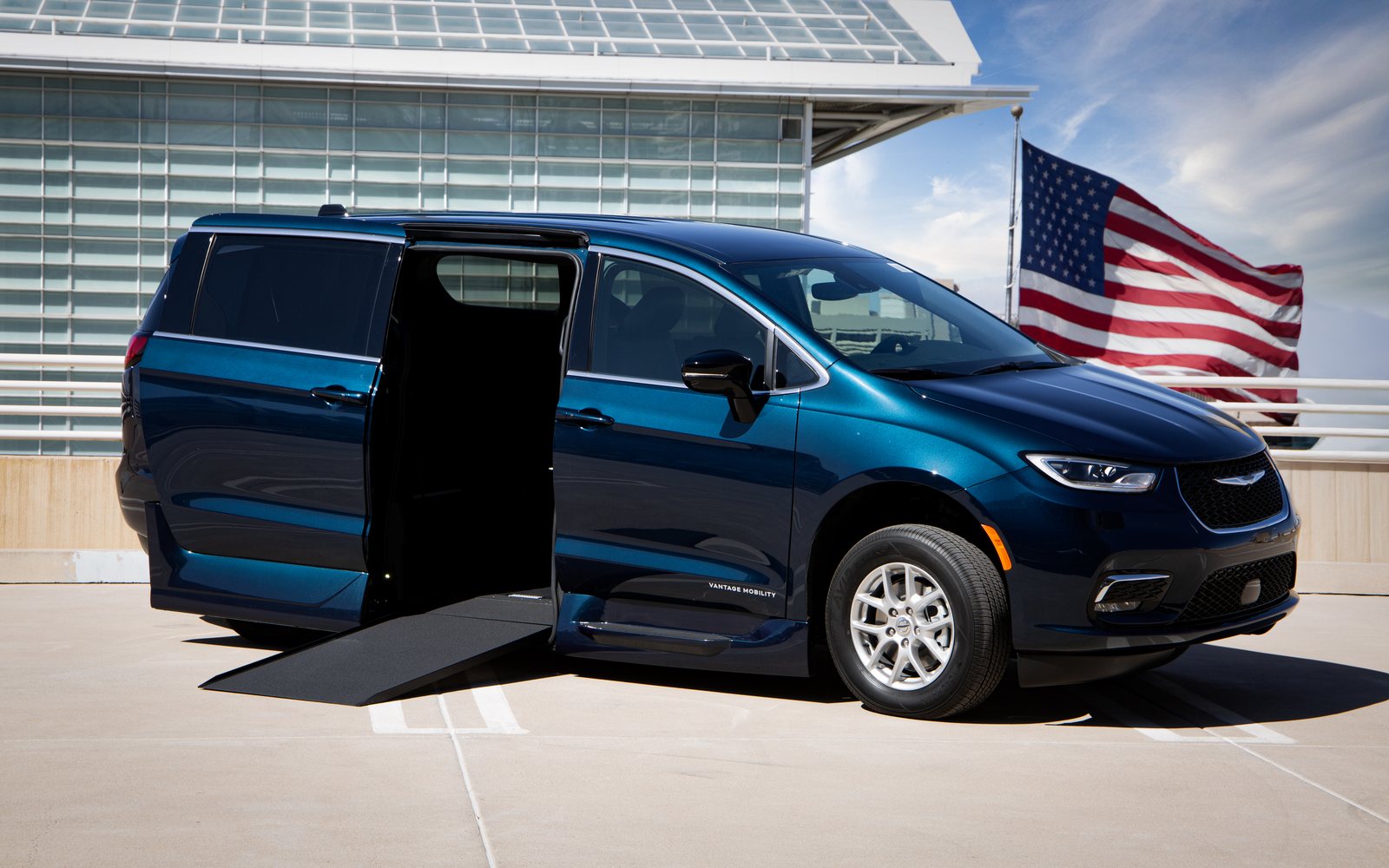
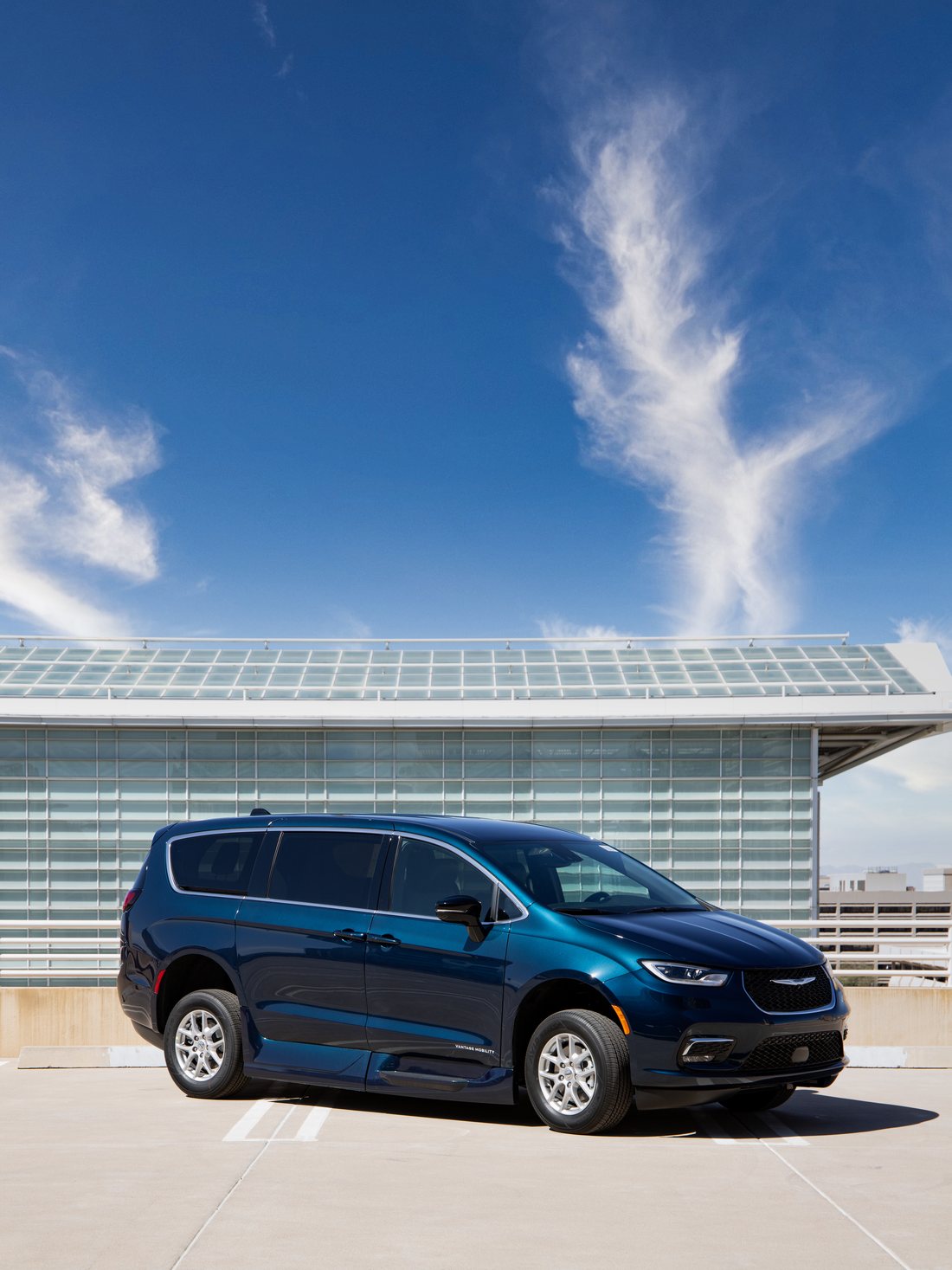
The same Pacifica with its doors closed, parked on a rooftop deck — from the outside it reads as an ordinary minivan.
Side entry · power in-floor ramp · AWD

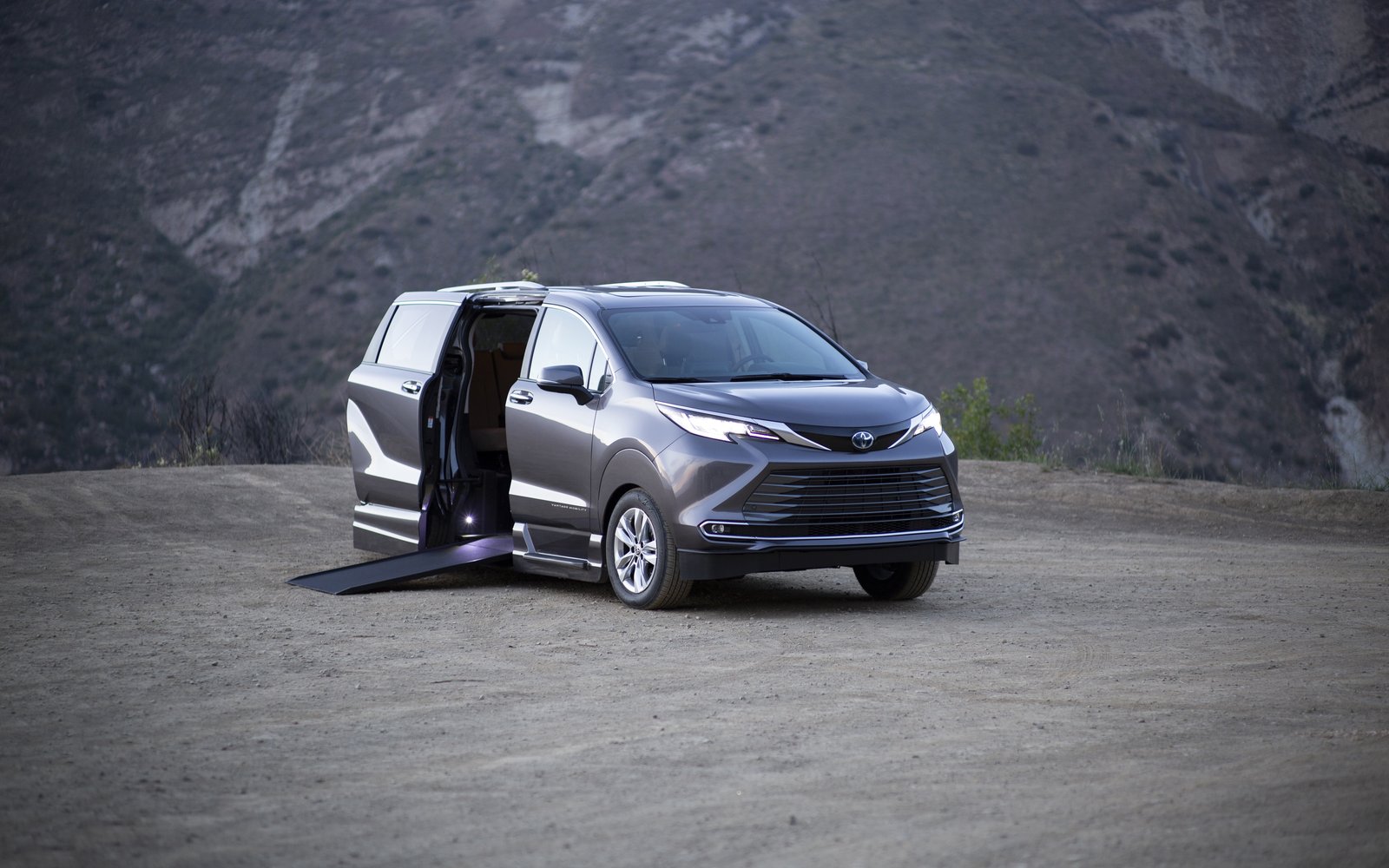
Toyota Sienna Northstar

The only all-wheel-drive wheelchair van in existence. Traction on snow, gravel and wet canyon road that no other accessible vehicle can offer — paired with Toyota's hybrid system, which matters when the nearest specialist is three hours away.

If the power dies, the ramp still comes out. There is a manual crank — the wrench lives under the rear bench — and in an emergency the in-floor ramp can be pulled out by hand from outside the vehicle. Ask us to show you on the lot; it is the five minutes most owners never spend.

The premium end of what we carry, and the one worth the drive to come see.

LE · XLE · XSE · Platinum · AWD hybrid

Rear entry · manual fold-out ramp

Toyota Sienna Rear Entry

Toyota Sienna Rear Entry in profile, tailgate raised and the ramp folded out onto the ground behind it.

You are never parked in, and you never wait for an accessible space — you deploy into the aisle behind you. The spring-assisted ramp is manual, which means it still works when the electrics don't, and it latches down so it doesn't rattle.

It also carries more than people expect: up to six passengers with one wheelchair user, or five with two. Front seats, console and hybrid system stay factory Toyota, Safety Sense included.

LE · XLE · front-wheel drive hybrid

Side entry · power in-floor ramp

Chrysler Pacifica & Voyager

Chrysler Voyager in profile with the sliding side door open and the in-floor ramp extended to the ground.

The Northstar ramp stows beneath the floor rather than folding across the doorway, so the entry stays clear. PowerKneel drops the suspension to flatten the ramp angle, and toggles off when you're at a tall curb.

Sure Deploy gives you a second ramp control inside the vehicle and a manual crank for when there's no battery at all — the backup we tell everyone to practice once in the driveway.

Both front seats are interchangeable or removable, and the vehicle is drive-from-wheelchair compatible — so a wheelchair user can take the driver’s seat, or two people can swap who drives.

Voyager LX · Pacifica LX · Pacifica Select

All three

What comes with any of them

A seven-year, unlimited-mile rust-through warranty — the longest in the industry, and worth more than it sounds on a vehicle washed down every winter.

Durable rubber safety flooring, LED lighting throughout, and seating you configure rather than accept: fixed or swivel mid-row seats, third-row options, or the full OEM bench.

Between these three and the Van America full-size builds, there are very few situations we can't put a vehicle against — and no reason for us to push you toward one over another.

Next step

Ask about VMI models.

Tell us the chair and where you park, and we’ll tell you which of the three fits — including if none of them do.